
2 Motivational Graphs to Inspire Learner Autonomy & Self Directed Learning
How to Motivate Learners with Minimal Study Skills
There is a common misconception amongst students that by simply turning up to an English class, they’ll learn English.
Us educators know that is not the case. The pursuit of learner autonomy is a challenge for us all.
Over the years, I’ve delivered countless sessions with learners on the importance of good note taking, doing homework, seeking out online self-study apps, finding someone to practise with outside the classroom, setting weekly goals for vocabulary learning (etc, etc).
I've even written blog posts for other teachers on it:
Yet, somehow the myth persists among some learners. So we have to get creative.
Here's a quick little minimal preparation activity with a high impact. When I tried this with my beginners, I could almost see the lightbulbs switching on above their heads - as the classroom erupted in knowing giggles.
Two High Impact Graphs To Motivate Learners
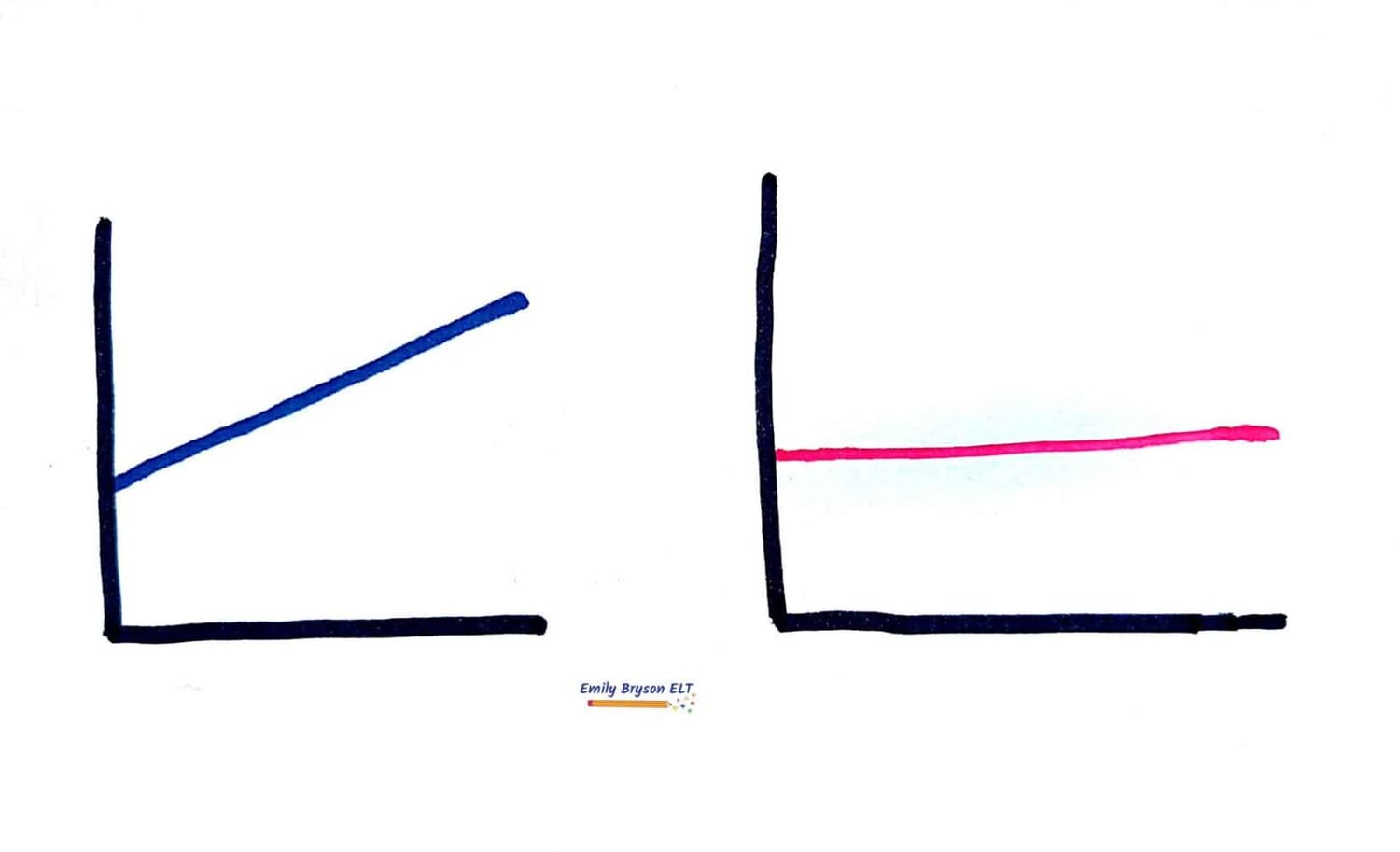
First, draw two graphs on the whiteboard, as below.
Tell students that one of the graphs represents a learner who does their homework, asks questions, reads in English at home, listens to music and radio in English, uses English outside of the classroom.
Then, say that the other graph shows a learner who doesn't do their homework, is often late or doesn't attend class, doesn't take notes, never asks questions and doesn't find ways to use their English outside of the classroom.
Whenever I do this, I usually end up with some nervous giggles. There's an instant understanding that effort made has a direct effect on success, even with lower level learners.
At this stage, there is always a risk of public shaming, and that should never be the intention. We want to make sure that everyone feels welcomed and included. Drawing the graphs themselves and having students internally and secretly reflect is sufficient.
If you like this idea, you may also like these blog posts, my online courses or resource packs.
Visual Thinking to Make Learning Accessible, Engaging & FUN,
I'm Emily Bryson, an English Language Teaching Specialist who brings visual thinking sparkle to classrooms around the world.
I can help ELT Professionals and Educators with:
Teacher Development online and in-person
Visual Thinking Resource Packs for language learners
Online Courses in visual facilitation for English language teachers
Materials, Books, Blogs for the ELT classroom
FREE Guides in Sketchnoting & Graphic Facilitation for learning English
Free Guides in Visual Thinking for English Language Teachers


Online Courses & Resources with a Visual Twist
Designed Especially for ELT Professionals


Visual Note Taking (Sketchnoting) & Teacher Development Services for Online & In-Person Educational Conferences & Events


Leave a Comment
🪄 Visual Sparkle for English Language Learning & Teaching 🪄
Copyright © 2025 Emily Bryson ELT


